 Vision
Technology
Demand
Finances
History
Early Access
Investors
Vision
Technology
Demand
Finances
History
Early Access
Investors
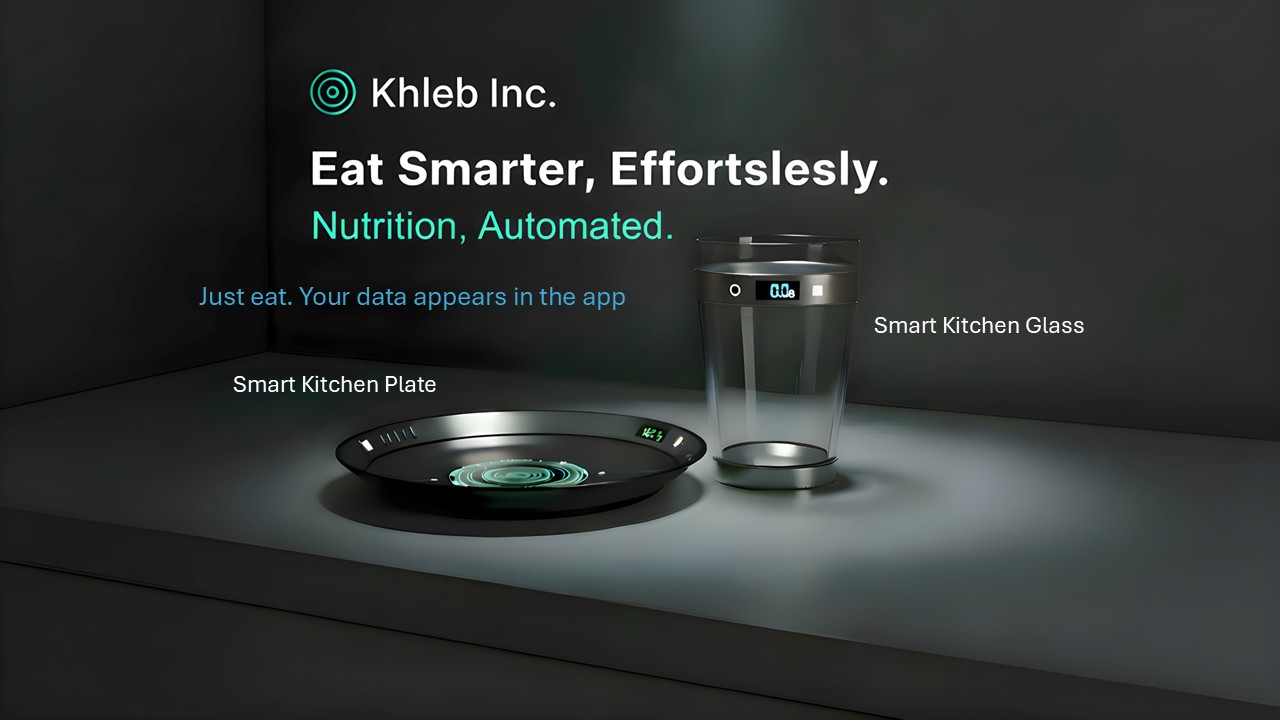
Stop logging. Start eating. Khleb automates your nutrition data gathering with clinical accuracy. No phones, no photos, no manual entries.
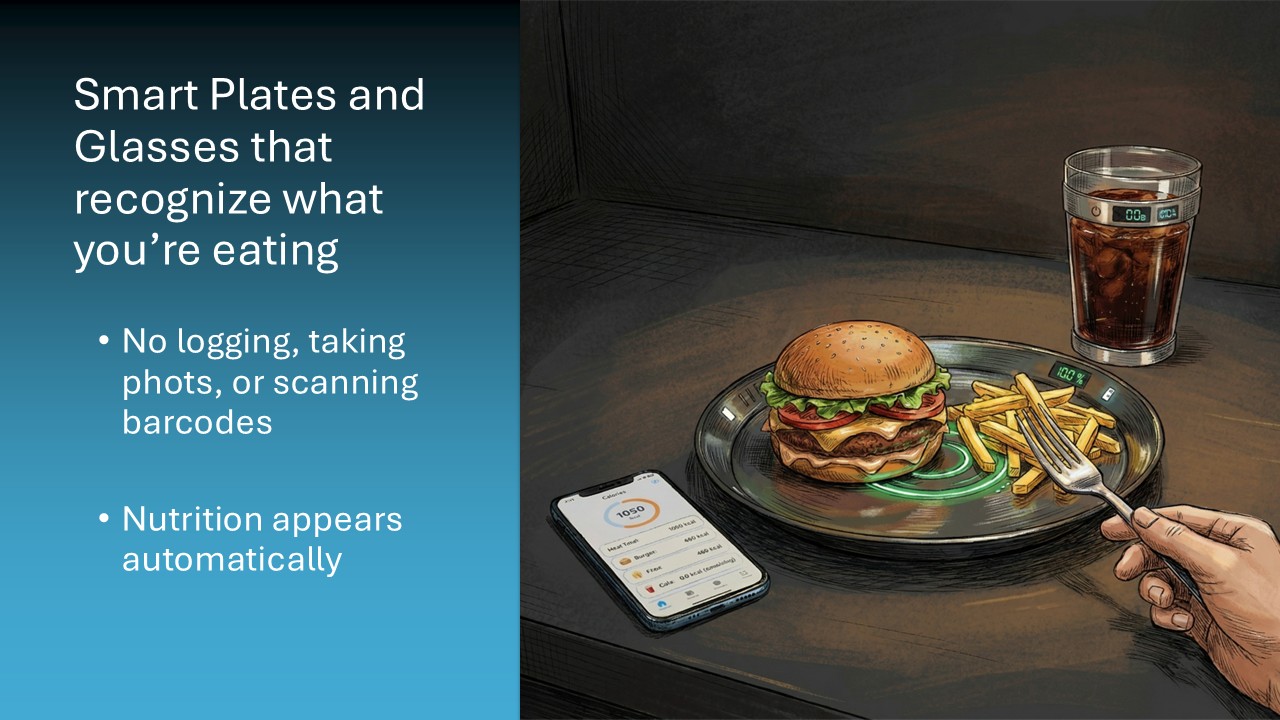
Just eat off our plate and drink from our glass and your nutrition data syncs to the Khleb app and your favorite health platforms automatically. It just works.
The Vision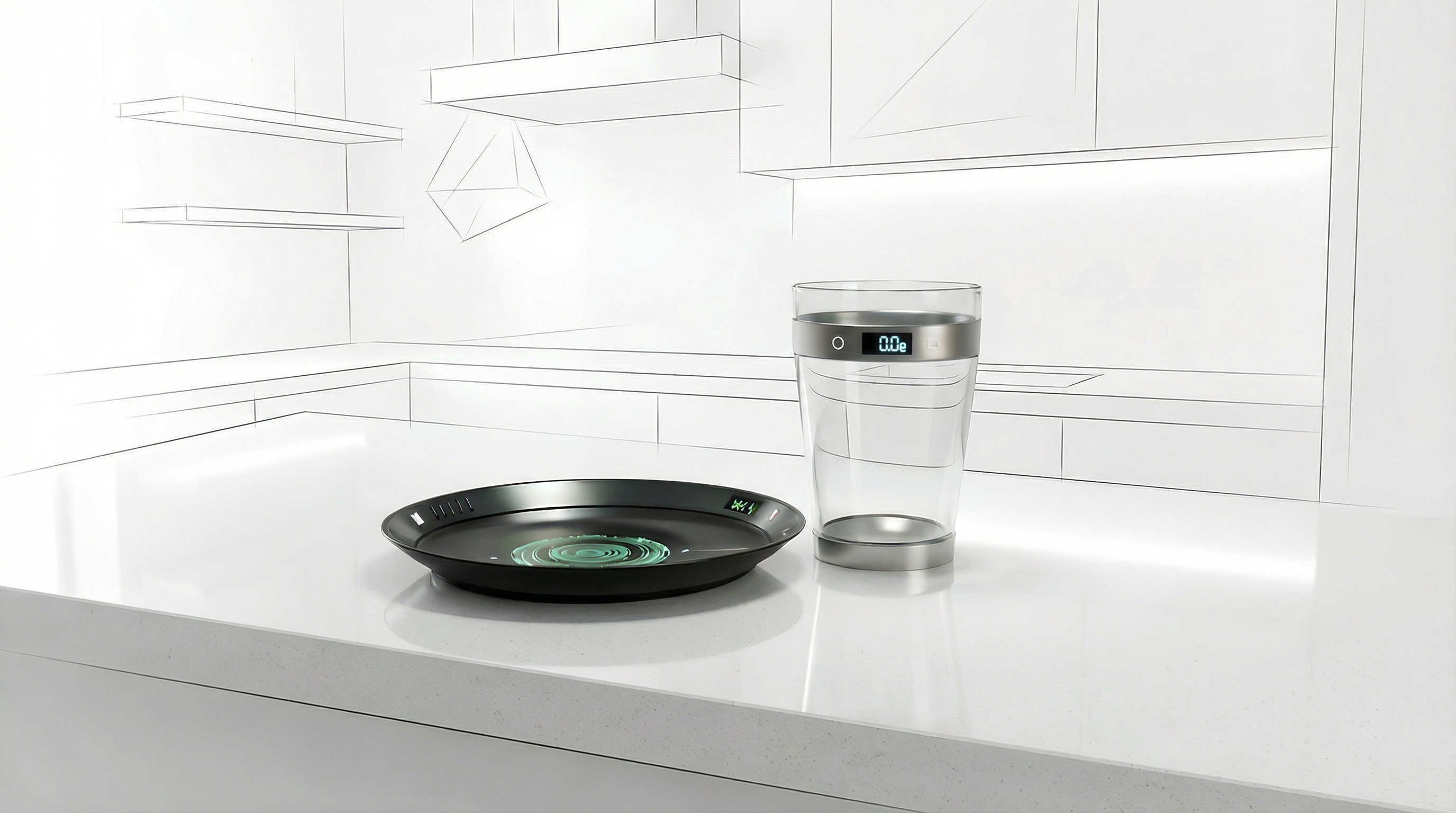
Khleb is creating the world’s first passive and automatic calorie tracking system through a flagship line of smart kitchenware. We are starting with a smart plate and glass, fitted with a clinical-grade sweep of sensors, a spectrometer, a camera, and a scale, with a roadmap towards an accessory that brings this same zero-friction technology to the dishware you already own.
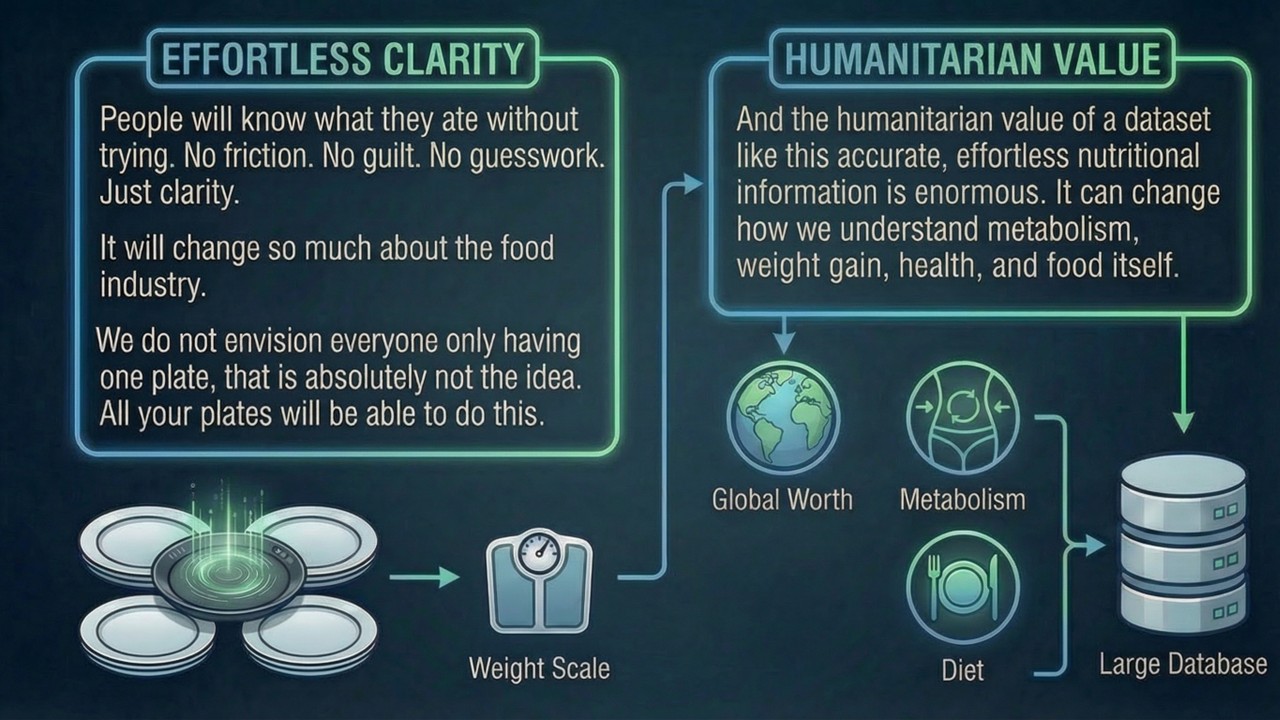
We envision a future where you can pick up a Khleb dishware set, i.e. plate, bowl, and glass, much like you would at a major retailer. Our vision relies on an abundance of this plateware; we believe tracking only works if it is ubiquitous. It is not conceivable in our vision to have one "special" plate you have to carry around with you; we know that is ridiculous.
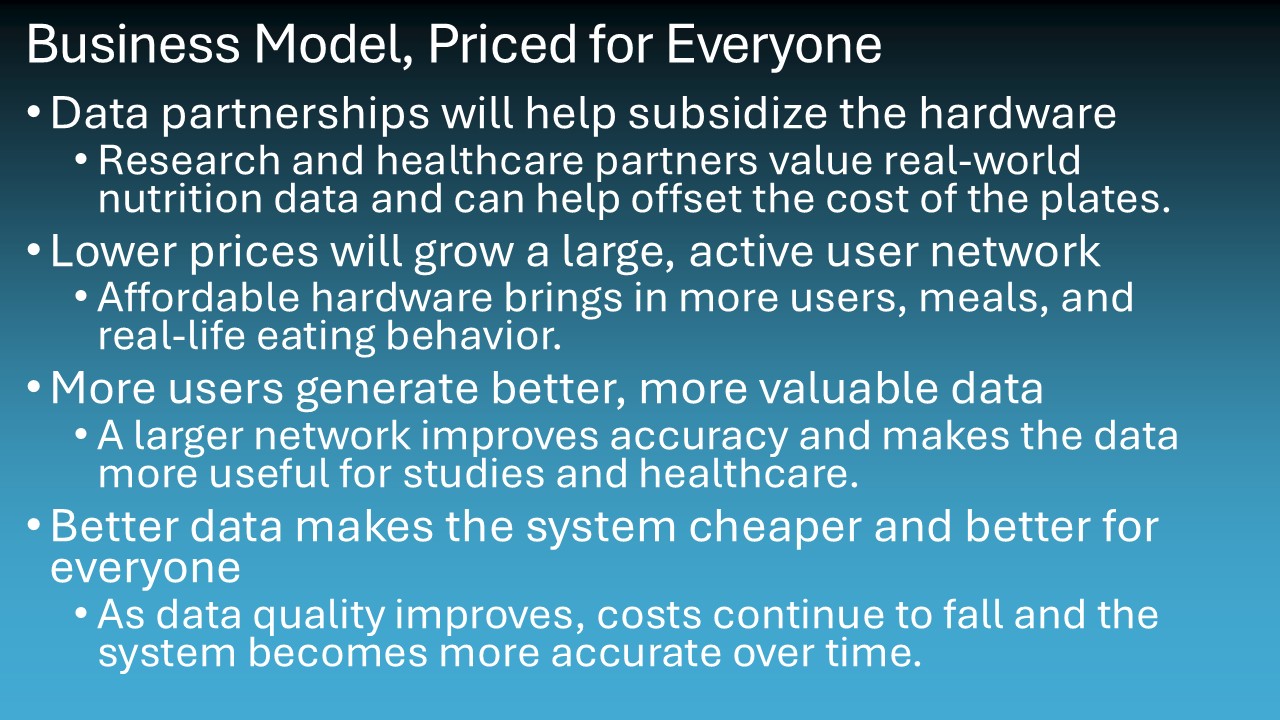
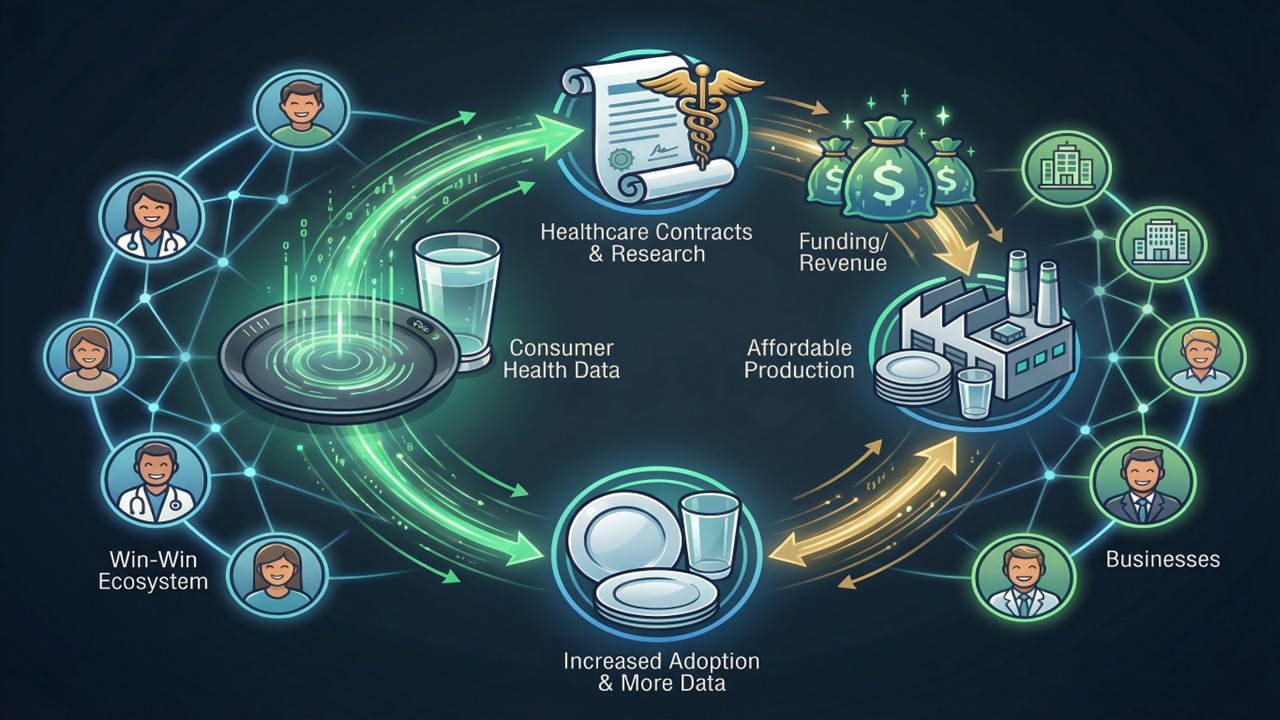
While the technology inside makes this more than a standard $25 family set, we are committed to a monetization model that keeps the entry cost accessible for every home. We believe health-tech must be passive to be effective. Just as the smartwatch and smartring revolutionized health tracking by working in the background, Khleb aims to do the same for the dining table.
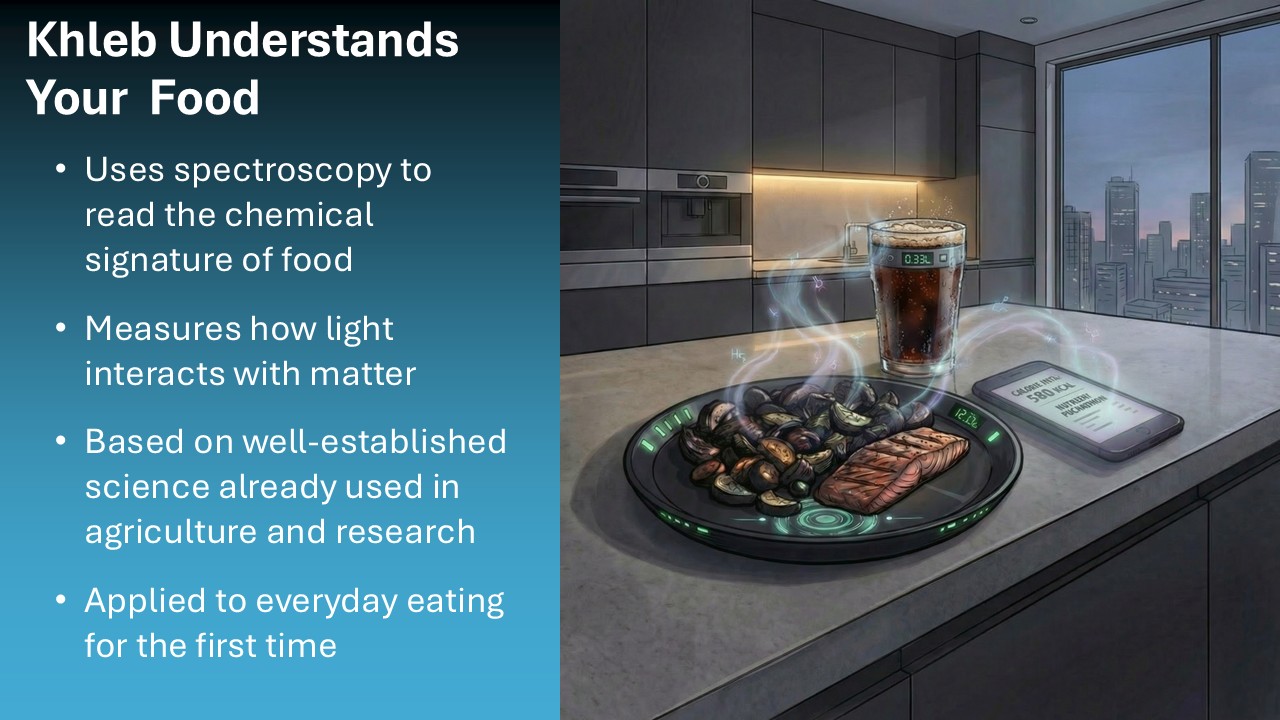
Spectroscopy, Khleb’s technical pillar for this product, is the method of detecting elements using light and is well established. Its history began over 300 years ago with Isaac Newton. A plate that just knows what you eat while you do nothing seems like science fiction (we know!) but as we see with self-driving cars and automated grocery stores, fiction is becoming a reality.
We want to ground this idea in its physical plausibility. Consider the sun: it is 93 million miles away, a distance so vast it is impossible to intuit. Yet, we do not need to touch the sun to know its molecular composition. The science of analyzing chemical signatures from a distance, without physical contact, is spectrometry. This is the exact science we are applying to the dining table.
We empathize with the skeptics, but based on the evidence, we have moved past doubt. At Khleb, this has been a journey from mystification to engineering. We feel simultaneously mystified that this is possible and shocked that it isn’t done yet. Our results align perfectly with existing research and expert consensus: the barrier to automatic calorie tracking isn't a lack of technology, but a lack of focus and execution.
The technology required to implement this at scale and reasonable cost exists today. From a hardware perspective, this system is significantly less complex than the smartphone in your pocket; it is essentially a high-precision scale integrated with specialized cameras. By utilizing mass produced silicon sensors and integrated load cells, we are finally turning the technology used to analyze the stars toward what we eat. This same technology is already employed at scale in industrial agriculture to verify food quality; we are simply the first to bring this clinical truth to the consumer home.
Humankind is passionate about food as a biological imperative, and the industry surrounding it is massive, yet we still settle for guesstimation. We live in an era where we obsessively quantify our steps, our heart rate, and our sleep cycles, yet we remain totally ignorant of our diet. It is time to fix this oversight, and Khleb is here to do it.


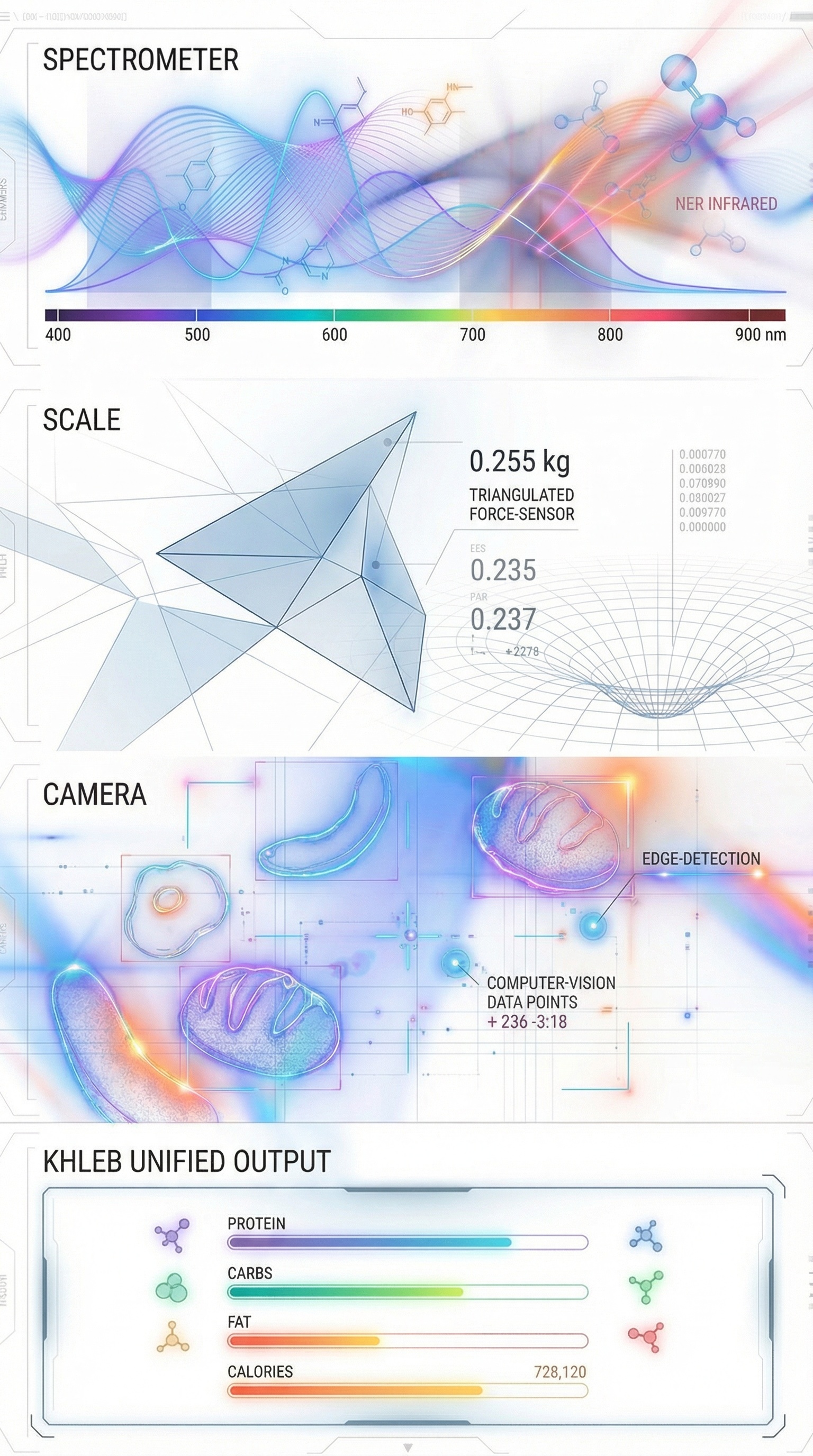
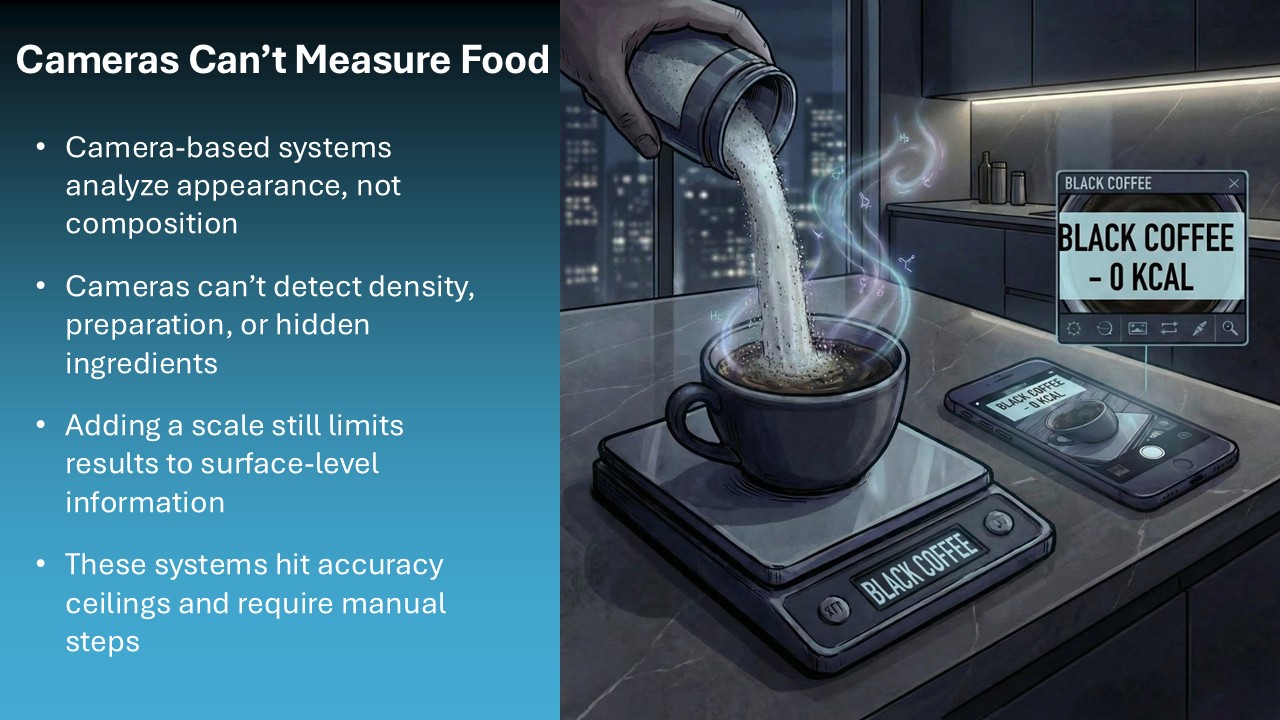
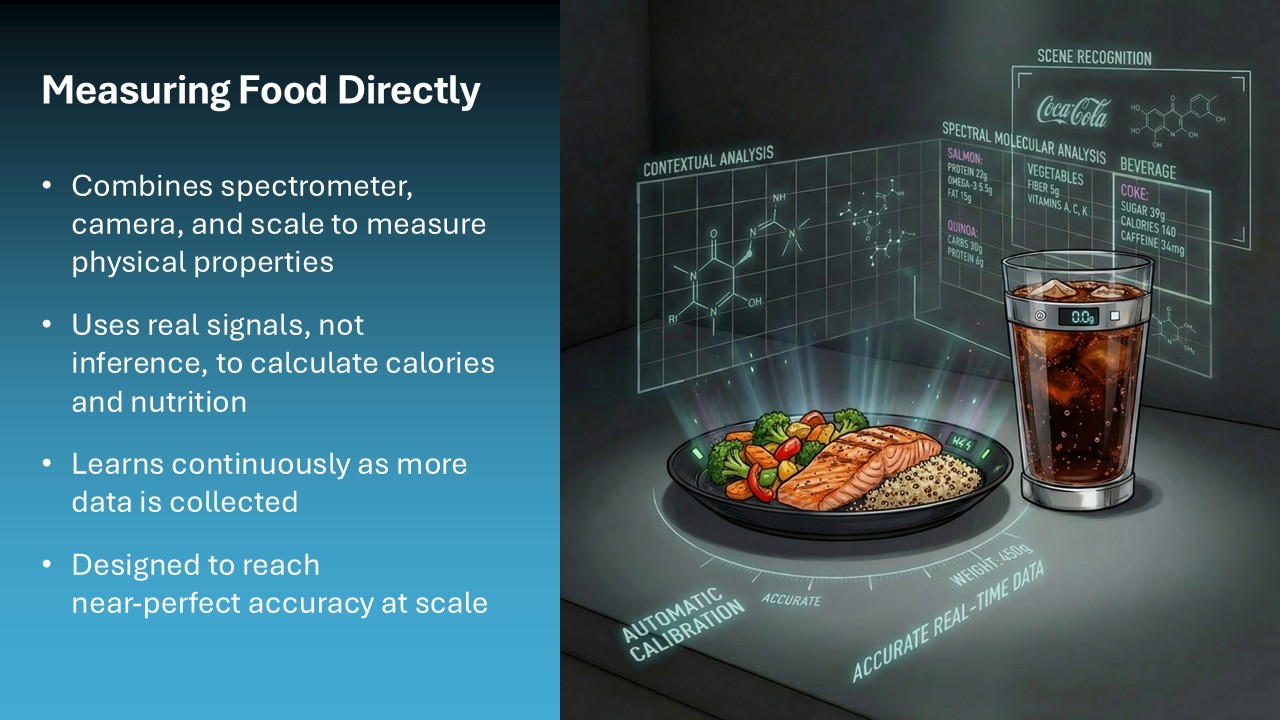
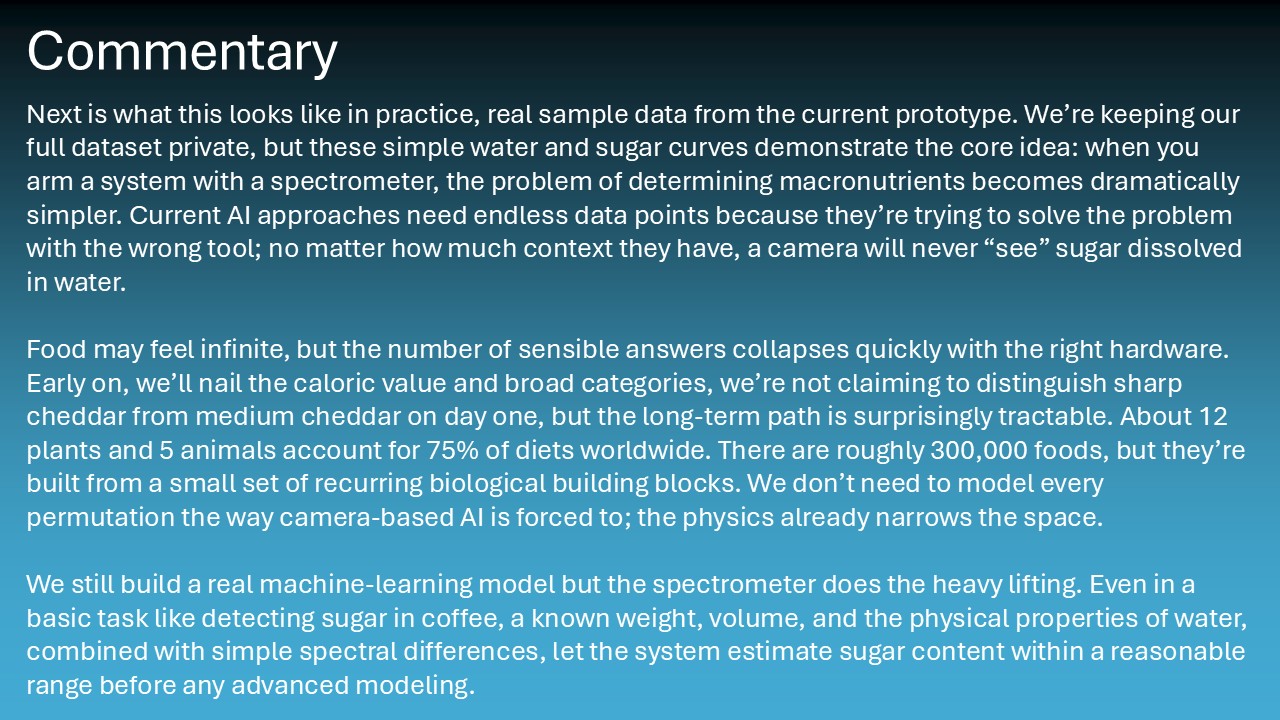
Khleb is starting this process with a three sensor system: spectroscopy, visual inspection, and weight. We believe the permutations and combinations of possible valid results meeting these parameters are very low, allowing us to determine what the user has consumed with a high degree of accuracy. The spectrometer is the key; it allows you to do what’s impossible with computer vision alone, identifying the difference between margarine and butter, the density of mashed potatoes, or the hidden sugar in a cup of coffee.
By fusing these three datapoints, we move past "guesstimation" into the realm of clinical certainty. By pairing the user via a smart utensil, or another way and monitoring the dishware state before and after a meal, Khleb replaces the friction of manual entries with automated, high-fidelity nutrition tracking.
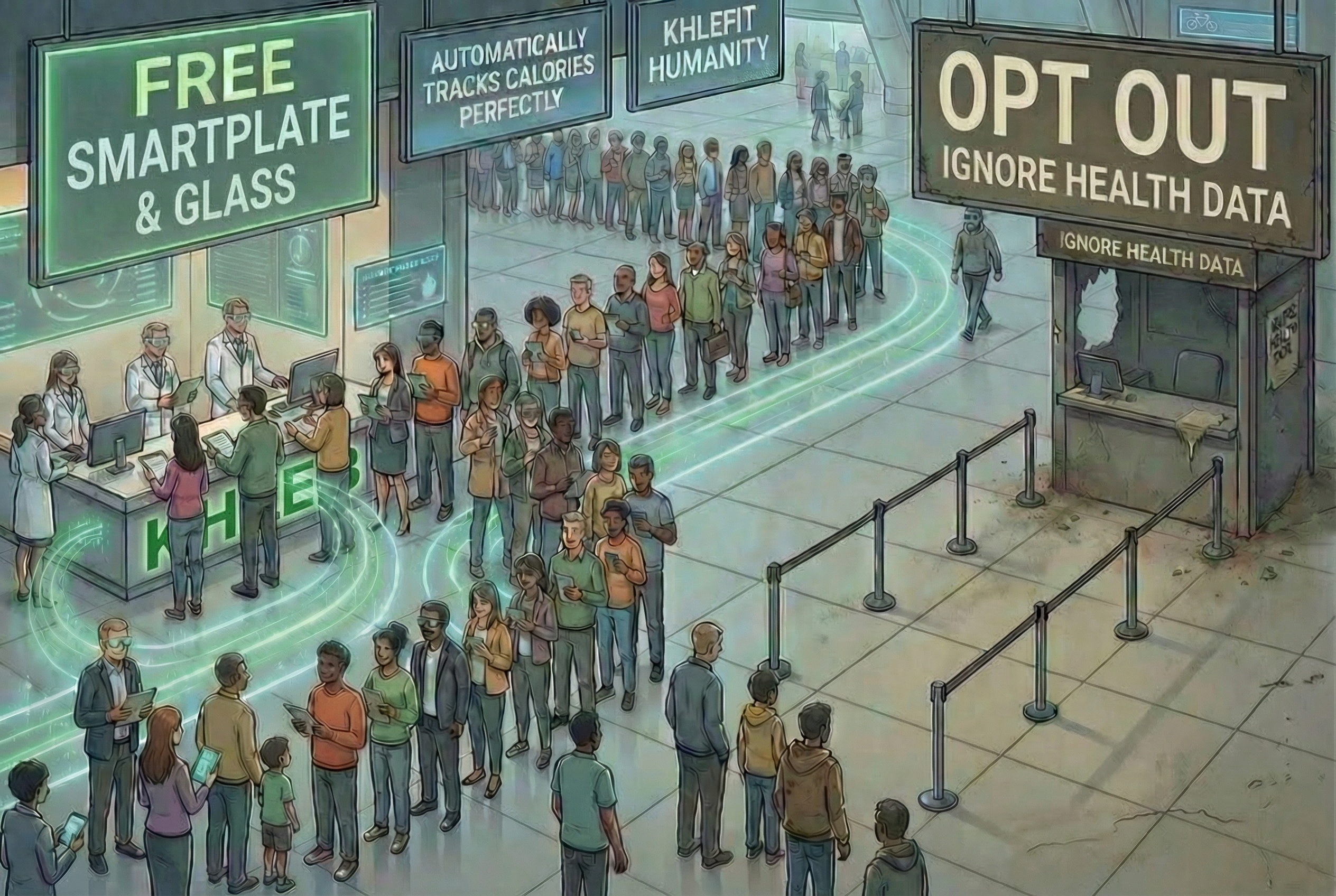
If a wand could be waved and everyone could have their nutritional data captured perfectly without lifting a finger, would anyone opt out? We are a society obsessed with longevity, weight, and image. The question isn't whether people want this data; the question is: can we design a product effortless, accurate, and affordable enough to deliver it? In our concept, this is what we are doing. You eat off a plate. That’s it. This is the only conceivable way to make this work.
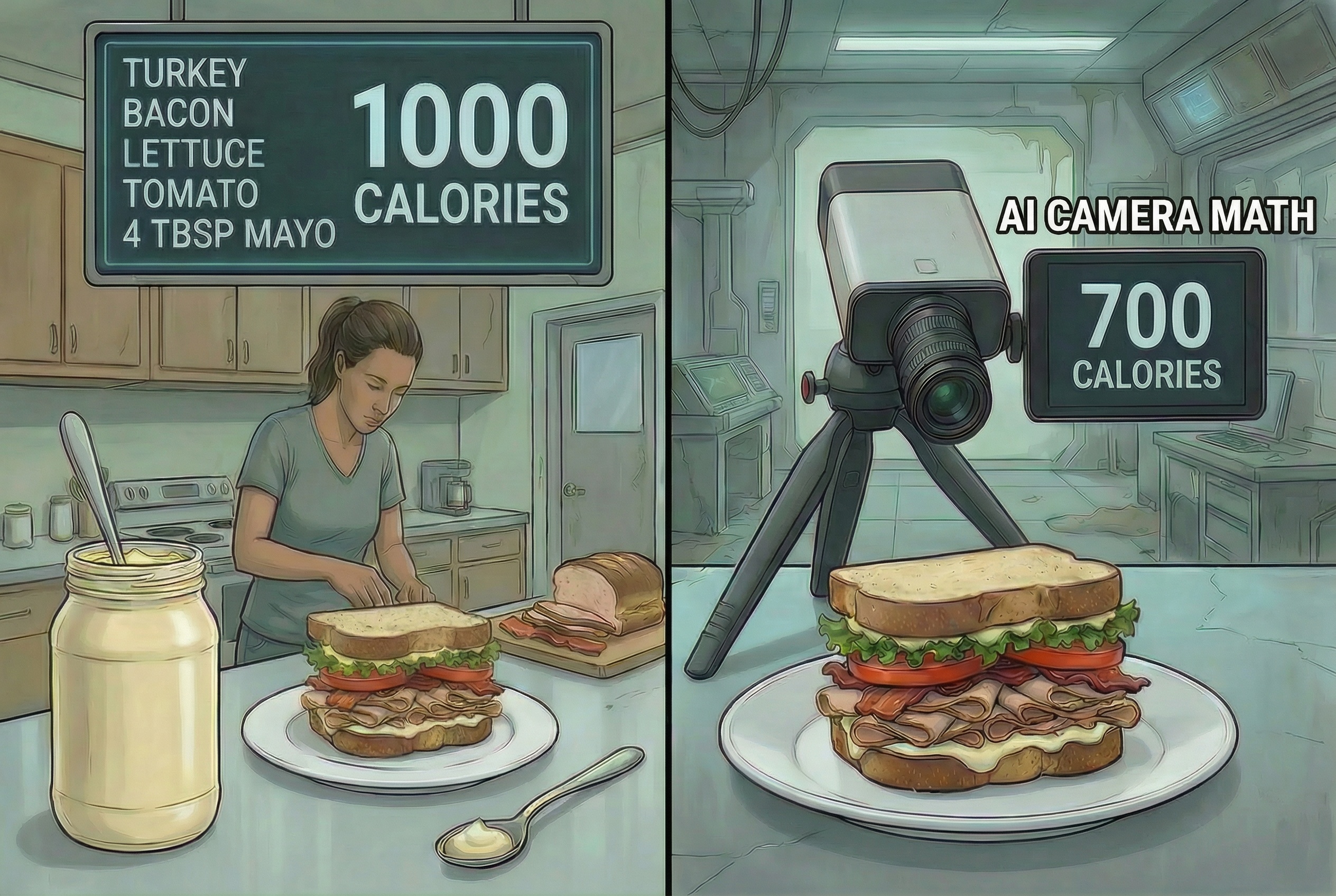
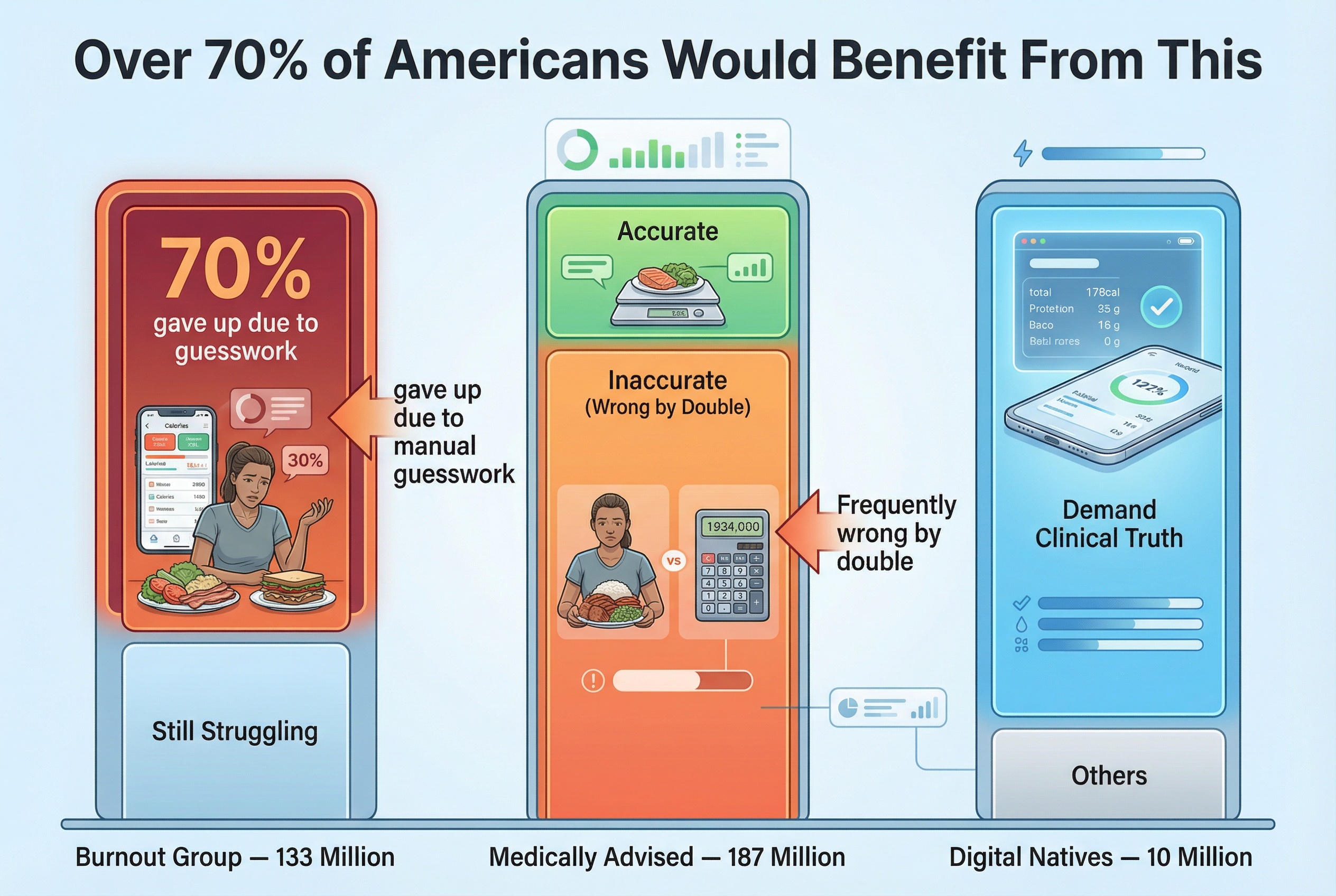
The market is flooded with "point-and-shoot" apps claiming accuracy, but these tools are fundamentally broken. Meaningful datasets are not achievable through a lens because a camera cannot see the difference between salt water, sugar water, and plain water. Even a microscope cannot see this; there is no way to "visualize" molecular identity with a 2D sensor, no matter how far one zooms in. Anyone can "witchcraft" a statistic for a headline, but the harsh reality is that it’s a visual guess frequently wrong by half or even double the actual caloric value.
We don't need to convince people to track; we need to provide a tool that works in the background of their lives rather than forcing them to eat for a sensor:
Generously accounting for overlap, we have 150 million Americans primed for this technology. If Khleb captures just 25% of that pool, a modest $1 profit per user results in a $40 million outcome with a massive Defensible Edge:
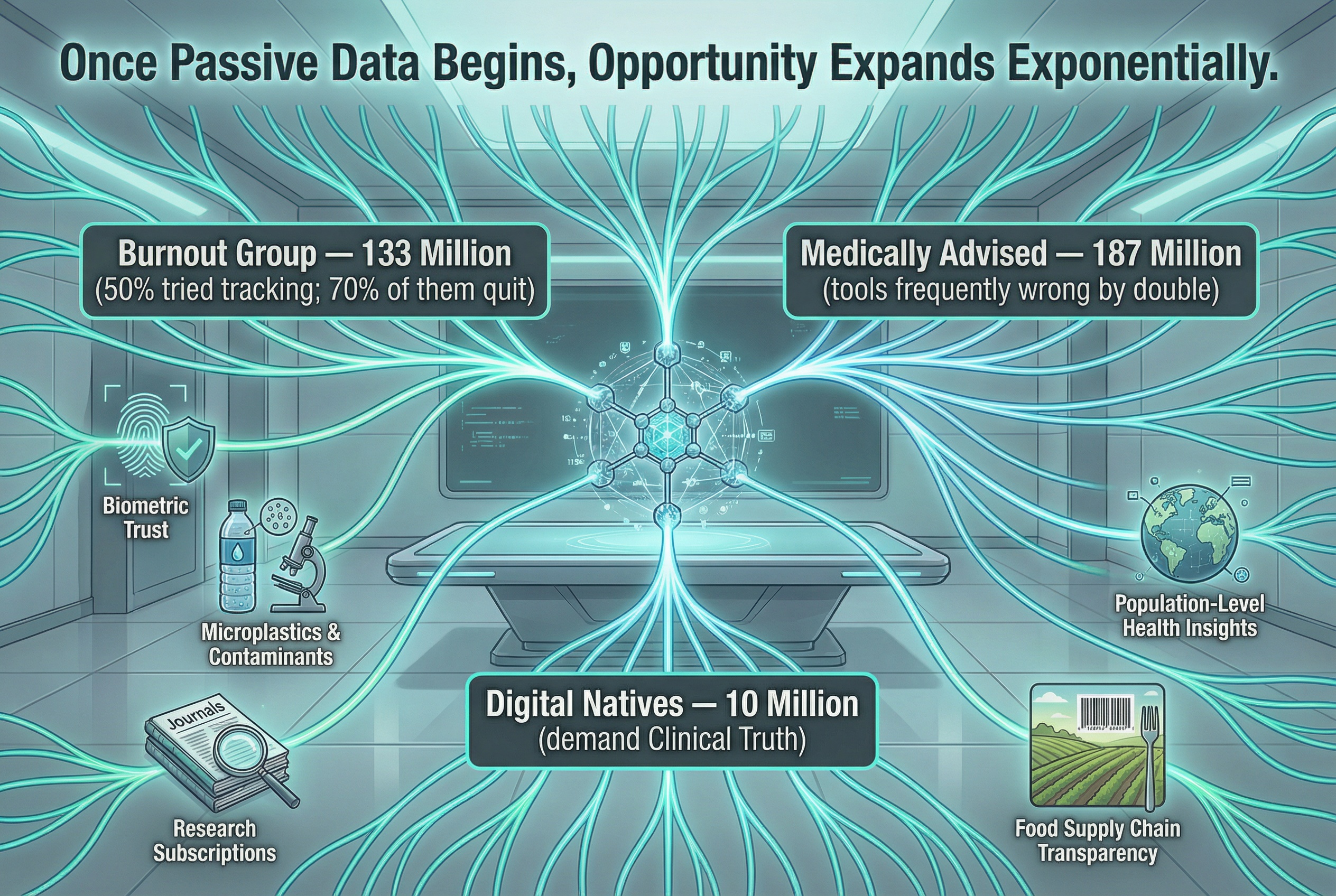
Independent demographic modeling across the U.S. market.
Active Adults
Active Youth
Total User Base
Annual Profit
Passive, Invisible, Absolute. No partitions, no photos, no manual experiments. Just eat and the health data is captured

Investors Join for DataRoom & Strategic Documentation
THE DATA ROOM INCLUDES:
Authentication required for investor access.


Khleb is currently in its Seed and Angel phase. This site was developed specifically with investors in mind, which accounts for the depth of content. We feel "simple" sites have reached an extreme where a company's actual purpose or product is often unclear. Phrases like "utilizing multi-modal sensor fusion to characterize the chemical and physical properties of matter" are technically accurate, but they are not helpful for the reader. In designing this site, we prioritized utility; while we value the minimalist standard of modern design, we find utility to be beautiful in its own right. Just as we care about our site being useful, we care about this product fitting into a user's life with nothing more to do than changing plates.
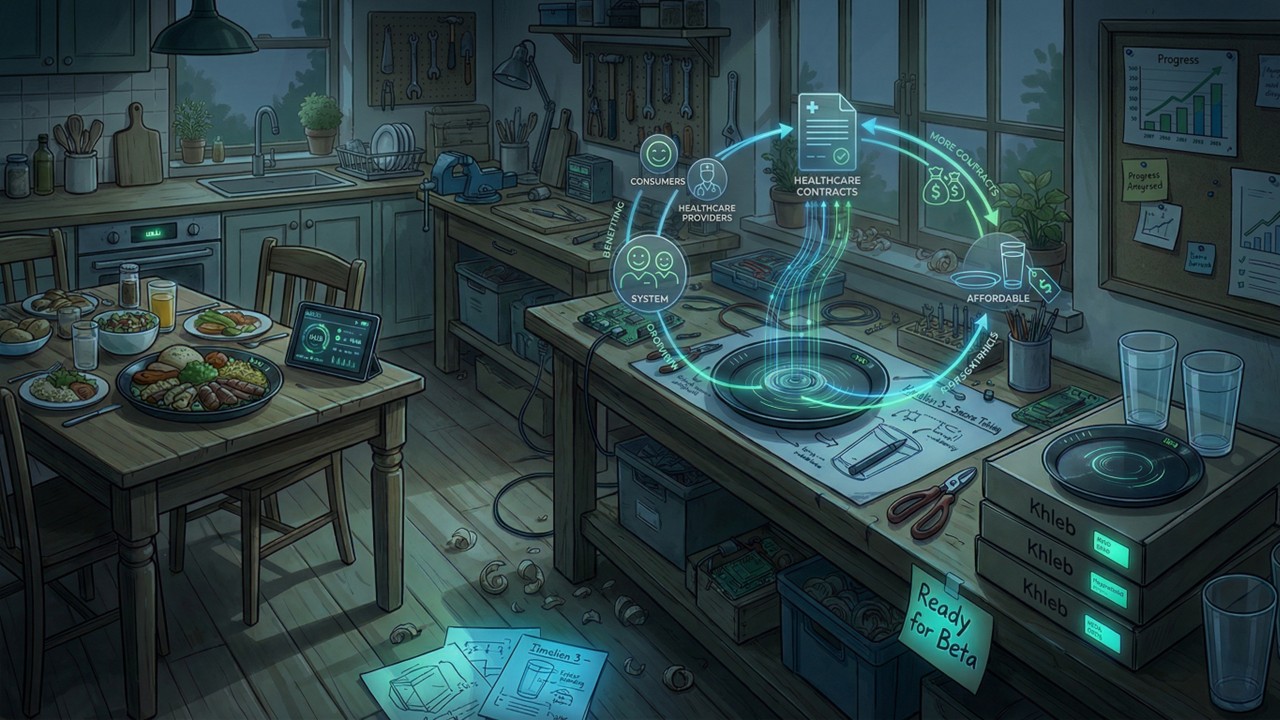
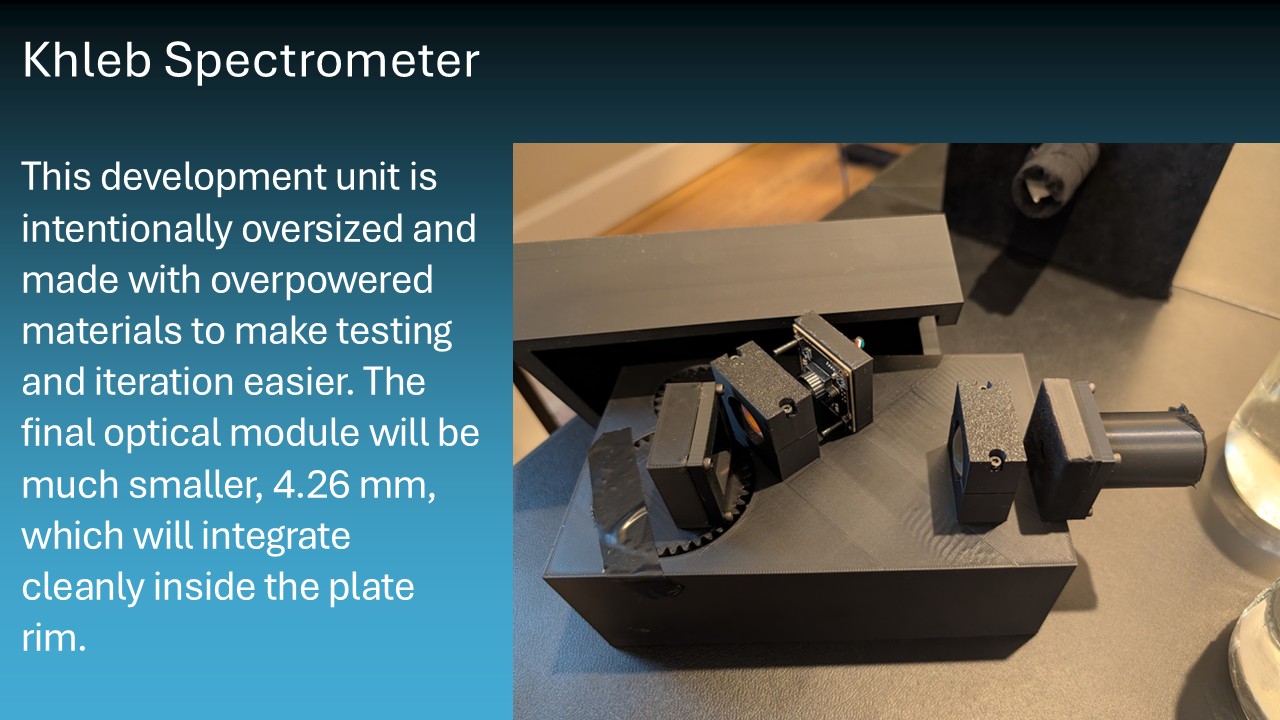
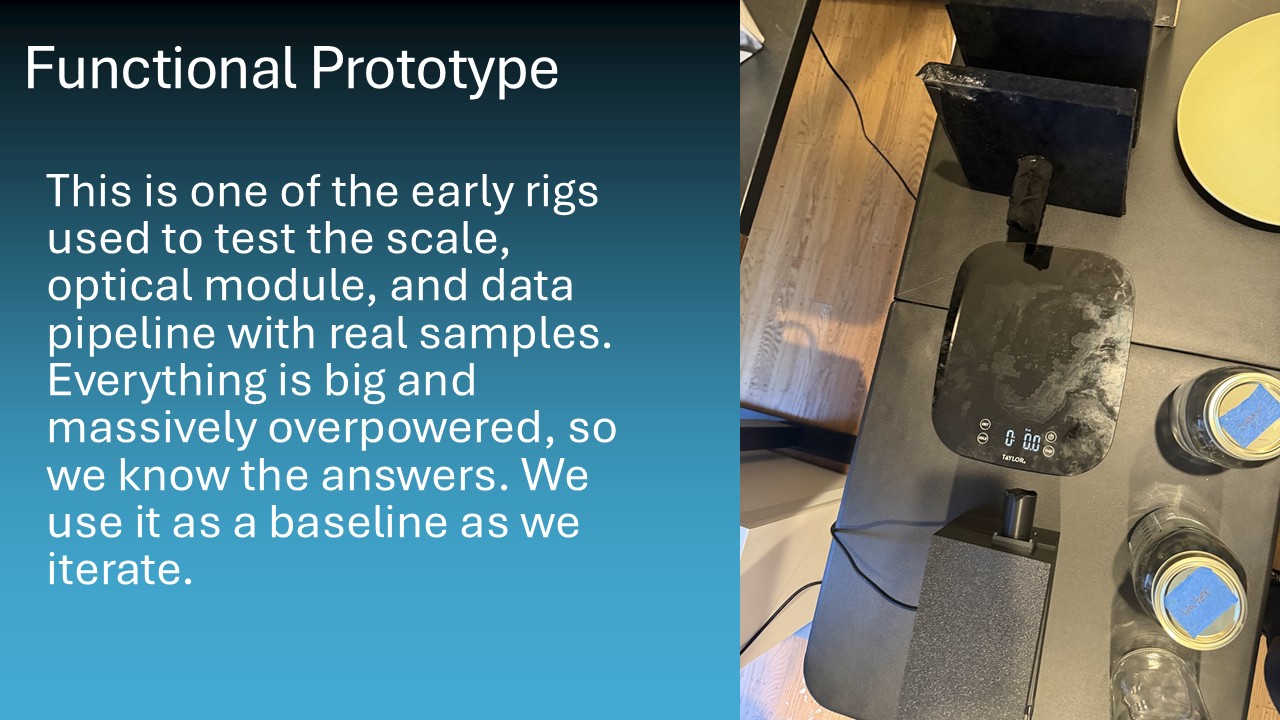
We have established the logic for why consumer demand is not the issue; this is a product people will use if it works. Khleb brings decades of professional experience in optimizing and automating workflows; we understand how to make user adoption frictionless and identify the key variables required to execute. We have a deep understanding of the diverse monetization paths available to deliver this product at a low cost. Our technical confidence is grounded in successful experimental execution; we have engineered our own spectroscopy prototypes from scratch and verified our ability to isolate and distinguish molecular signatures that standard AI or microscopy cannot.
Proprietary information, including specific unit economics, technical specifications, and detailed IP, is reserved for verified partners or serious potential investors. By providing the necessary background up front, we aim to avoid irrelevant tangents and focus our conversations on strategic execution.
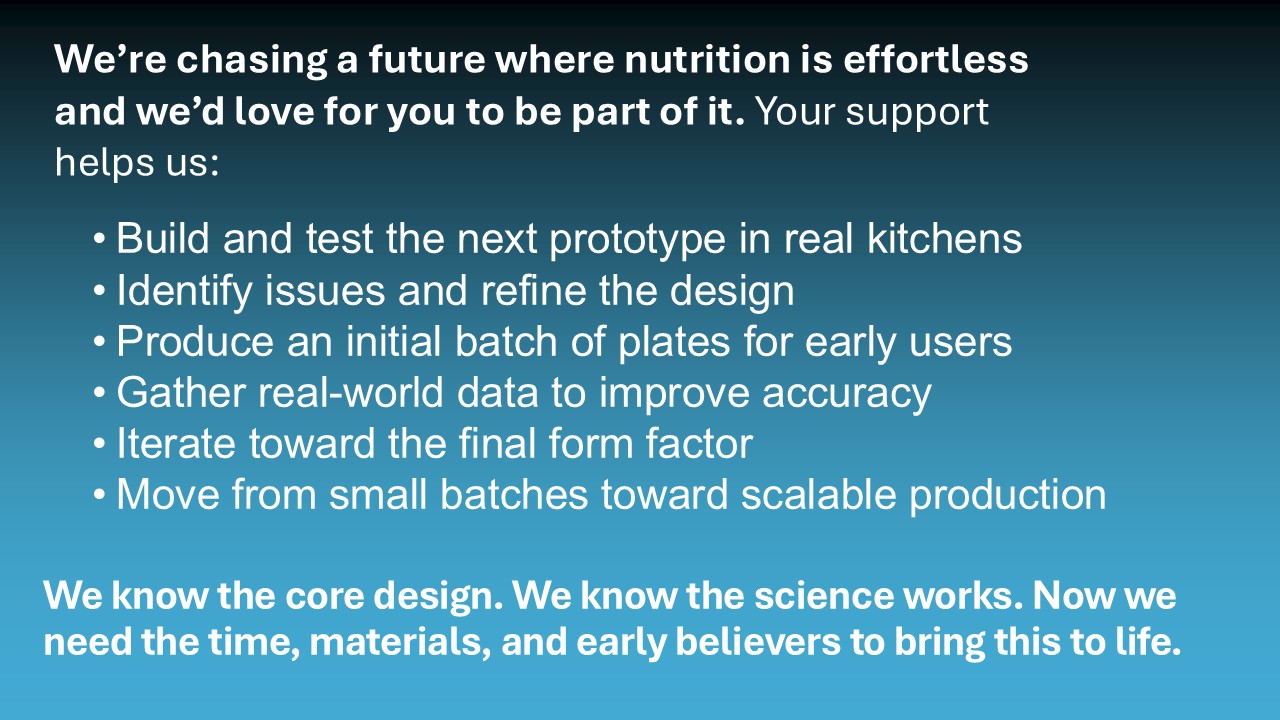
Our primary objective is to demonstrate functional viability in the market. We are keenly focused on fundamental execution risks: building a milestone-based plan, building a system that works reliably, maintaining a cost structure low enough for mass adoption, and refining a process that users will actually integrate.
 Google
 Microsoft